Why Is Christ the Redeemer One of the New 7 Wonders of the World?
Christ the Redeemer won the 2007 New7Wonders public vote. How the vote worked, who else won, and what UNESCO said about it.
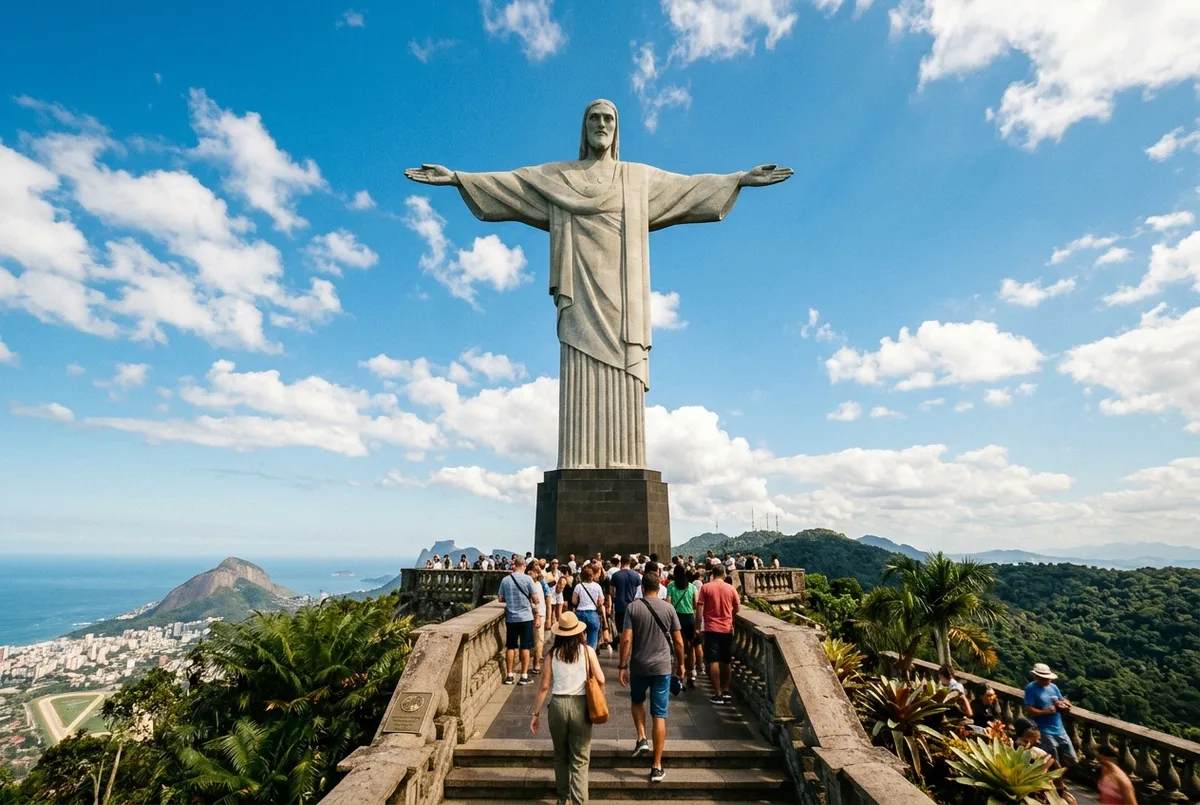
Christ the Redeemer won a spot in the New 7 Wonders of the World through a 2007 global public vote run by the Swiss New7Wonders Foundation, not through any scholarly or UNESCO ranking.
 Christ the Redeemer Entry Ticket by Corcovado Train From $48.99 · Classic train ride up See dates
On this page 7 sections
Why is Christ the Redeemer in the New 7 Wonders of the World? It won a 2007 public vote run by a Swiss foundation, not a scientific or UNESCO-backed ranking. I’d treat the title as a genuine honor of cultural fame, just not proof of anything more than that.
What is the New 7 Wonders of the World, and how is it different from the ancient Seven Wonders?
They’re unrelated lists that happen to share a name. The New 7 Wonders is a modern public vote campaign started in 2001 by the Swiss New7Wonders Foundation, while the ancient or classical Seven Wonders is a list from antiquity with no voting involved at all.
How was Christ the Redeemer chosen as one of the New 7 Wonders?
By popular vote, not expert panel. Roughly 100 million people voted online or by cell phone between 2006 and 2007, with winners announced on July 7, 2007 in Lisbon, Portugal.
The 2007 vote in numbers
Source:VOA Learning English and New7Wonders FoundationWhich other six sites won alongside Christ the Redeemer?
The Great Wall of China, Petra, the Colosseum, Machu Picchu, the Taj Mahal and Chichen Itza rounded out the final seven, as both the foundation’s own site and contemporary news coverage confirm.
| Status | Site | Country |
|---|---|---|
| Winner | Great Wall of China | China |
| Winner | Petra | Jordan |
| Winner | Colosseum | Italy |
| Winner | Machu Picchu | Peru |
| Winner | Taj Mahal | India |
| Winner | Chichen Itza | Mexico |
| Winner | Christ the Redeemer | Brazil |
| Finalist, did not win | Eiffel Tower | France |
| Finalist, did not win | Statue of Liberty | United States |
| Finalist, did not win | Acropolis | Greece |
| Honorary, outside the voted seven | Pyramids of Giza | Egypt |
Was Christ the Redeemer the only South American site chosen?
Yes. Among the seven winners it’s the sole South American entry and Brazil’s only representative on the final list. Encyclopedic coverage of the statue backs up the win too: Wikipedia’s entry on the statue cites a July 8, 2007 news report confirming its selection as one of the New 7 Wonders of the World.
Did UNESCO endorse the New 7 Wonders vote?
No, and it said so publicly. UNESCO stated it had no link to the campaign and that the list reflects the opinions of people with internet access, not a scholarly judgement, after the foundation’s founder reportedly sought a partnership UNESCO turned down.
“the group admits it did not check for repeat voting”
Voice of America (VOA Learning English), 2007 · source
Is the New 7 Wonders vote considered legitimate by experts?
Most heritage experts treat it as a marketing campaign rather than a scholarly ranking. Egyptian antiquities expert Zahi Hawass publicly dismissed the list, saying masses of people do not write history, and Egypt’s pyramids were given an honorary 8th position outside the voted seven rather than competing in it.
Say a reader planning a Rio trip sees Christ the Redeemer tickets marketed with a “7 wonders of the world” badge and wonders if that’s just advertising copy. Weighing the 100 million votes and the Lisbon announcement against UNESCO’s own distancing statement lands on a fair answer: cultural significance, genuinely yes; scientific ranking, no.
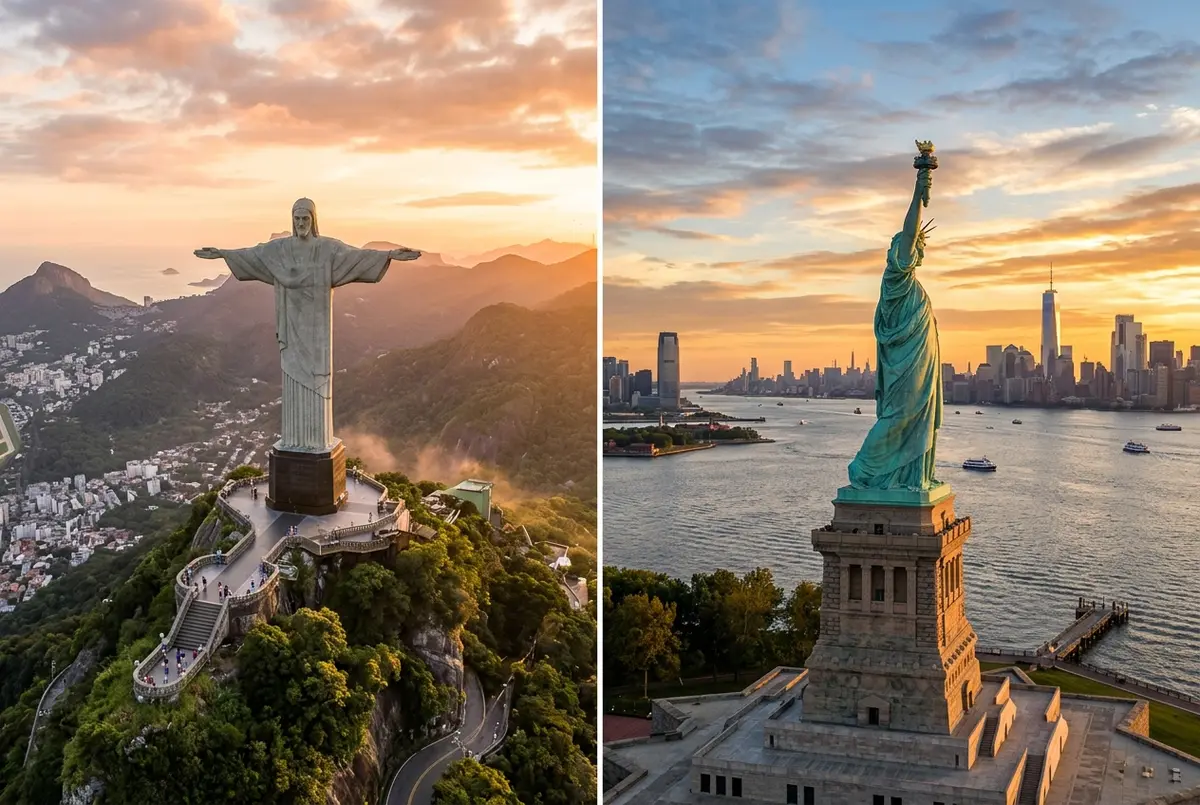
That cultural weight is still real, and it sits alongside the fact that the statue itself was built between 1922 and 1931, stands 30 metres (98 ft) tall excluding its 8 metre (26 ft) pedestal, and faces east atop the 700 metre Corcovado mountain in Tijuca National Park, a story covered in more depth on the facts hub, plus the full size comparison with the Statue of Liberty, one of the finalists that didn’t make the final seven. For the complete picture of statues like it, start at the Compare hub.
Questions
How many people voted in the New 7 Wonders poll?
About 100 million votes were cast online and by cell phone between 2006 and 2007, with no check against repeat voting, by the organizers’ own admission.
Who organized the New 7 Wonders campaign?
Swiss explorer Bernard Weber started the New7Wonders Foundation in 2001 to run the global vote and update the public’s idea of the world’s great monuments.
Did Egypt’s pyramids make the final list?
Not among the voted seven. They were given an honorary position outside the main result after Egyptian authorities objected to the pyramids competing in a popularity contest.
Is Christ the Redeemer part of the ancient Seven Wonders of the World?
No. The ancient Seven Wonders is a ranking from antiquity that predates Christ the Redeemer’s 1931 construction by over two thousand years, and the two lists are unrelated.