The History of Christ the Redeemer: Why and How It Was Built
Christ the Redeemer history: why it was built, who paid for it, and how materials reached the summit, each sourced and checkable.
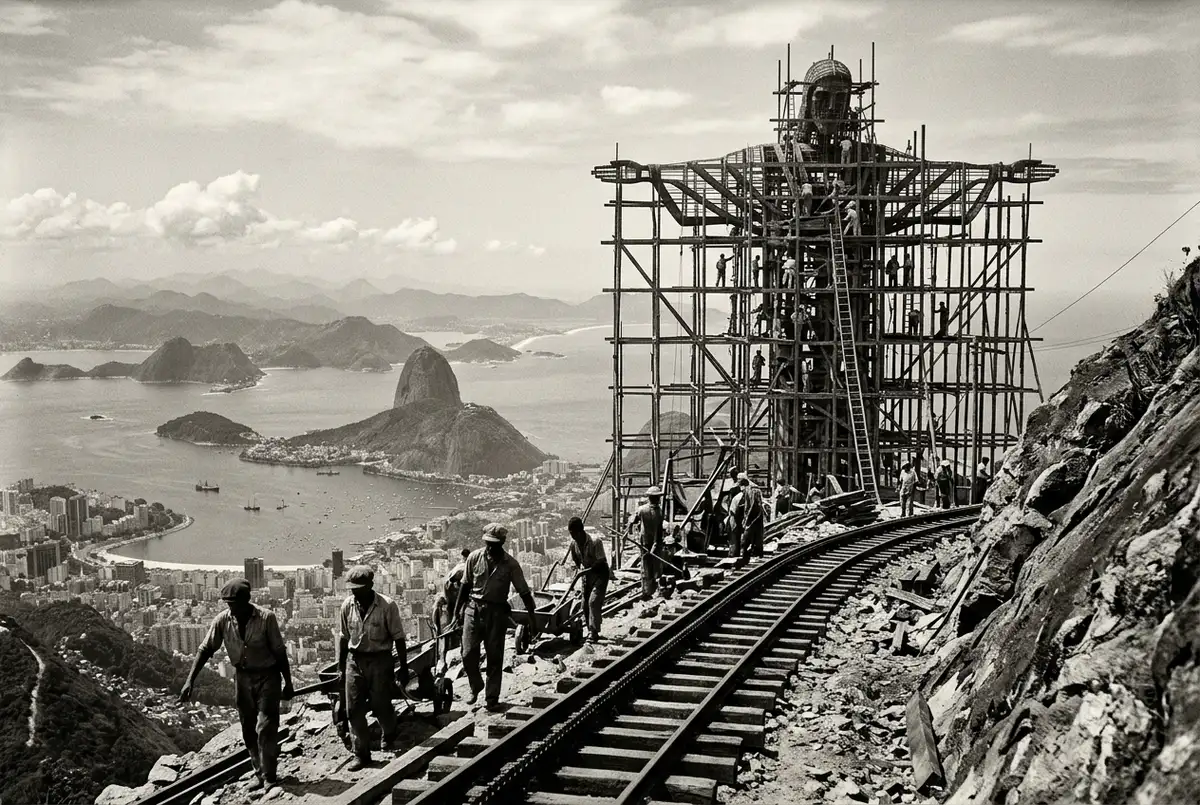
A 1920 Catholic fundraising drive, not a government project or a gift from France, paid for it. Brazilian engineer Heitor da Silva Costa led construction with sculptor Paul Landowski, finishing in 1931 after nine years.
 Christ the Redeemer Entry Ticket by Corcovado Train From $48.99 · Classic train ride up See dates
On this page 7 sections
Christ the Redeemer’s history starts with a Catholic fundraising drive in 1920, not a government order or a gift from France. I’d call the real origin story more interesting than the myth: a nine year, donation-funded build that finished in 1931.
The build, by the numbers
Source:Santuario Cristo Redentor and WikipediaWhy was Christ the Redeemer built?
A priest first proposed a monument on Corcovado in the 1850s, but it was dropped after Brazil became a republic. The idea came back in 1920, when the Catholic Circle of Rio launched a donation drive called Monument Week to build a landmark statue on the mountain.
Who built Christ the Redeemer?
Brazilian engineer Heitor da Silva Costa led the project with artist Carlos Oswald on the open-arms design, French sculptor Paul Landowski sculpted the figure and its head and hands, French engineer Albert Caquot designed the reinforced concrete structure, and Romanian sculptor Gheorghe Leonida carved the face.
“construction was financed by donations, with large popular mobilization”
Santuario Cristo Redentor, 2026 · source
Who paid for it, and was it really a gift from France?
No: it was funded by Brazilian Catholic donations, not by the French government. More than 20,000 women petitioned for it in 1922, and the whole nine year build cost the equivalent of about US$250,000.
That myth probably sticks around because Paul Landowski, the lead sculptor, was based in Paris. But the money and the push behind the project were Brazilian.
Where the statue stands today
Open in Google MapsHow did the statue and its materials get up the mountain?
The Corcovado railway, already running up the mountain, was the key route for hauling construction materials to the summit; the concrete base material itself was shipped in from Limhamn, Sweden before making that final climb.
Say you’re picturing 1920s workers trying to move concrete and soapstone to a mountaintop with no modern cranes. That railway route, plus a supply chain stretching all the way to Sweden for the base material, gives a real sense of how physically difficult the nine year build actually was.
| Stage | Detail |
|---|---|
| Proposal | 1920 Monument Week fundraising campaign |
| Construction | 1922 to 1931 (sources differ on the exact start, 1922 or 1926) |
| Cost | About US$250,000 |
| Opened | October 12, 1931 |
How long did construction take, and when did it open?
Construction ran nine years, with sources giving 1922 as the project’s start and the official sanctuary citing 1926 for groundwork on the summit; it opened on October 12, 1931.
For the finished statue’s exact dimensions, see how tall Christ the Redeemer is, and for more sourced numbers from the same era, see Christ the Redeemer facts.
What happened to the statue after it opened?
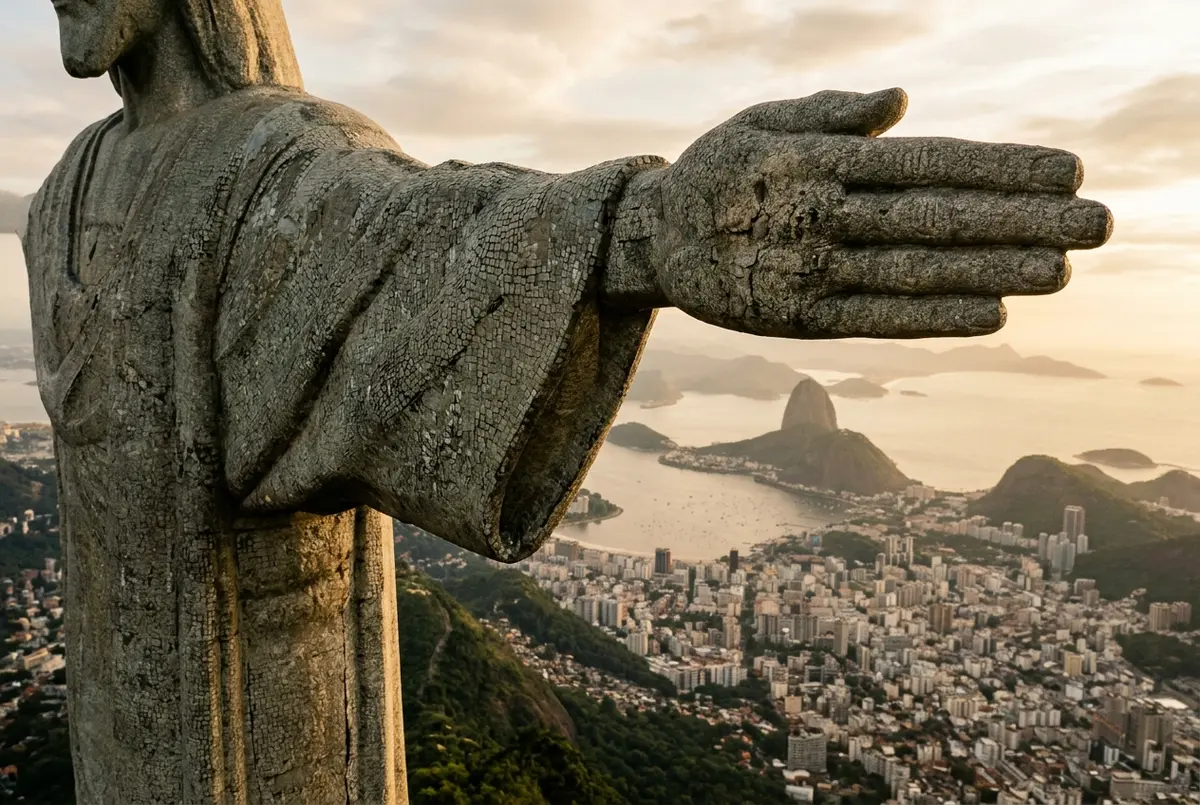
A chapel built into the pedestal was consecrated in 2006 on the statue’s 75th anniversary, and the monument has twice been struck by lightning, in 2008 and 2014, with each strike causing minor damage that was later repaired.
If you’re planning your own visit around what’s open today, see is Christ the Redeemer worth visiting for the current picture.
Questions
Was Christ the Redeemer a gift from France?
No. It was funded by Brazilian Catholic donations through a 1920 fundraising campaign, not by the French government.
What is Christ the Redeemer made of?
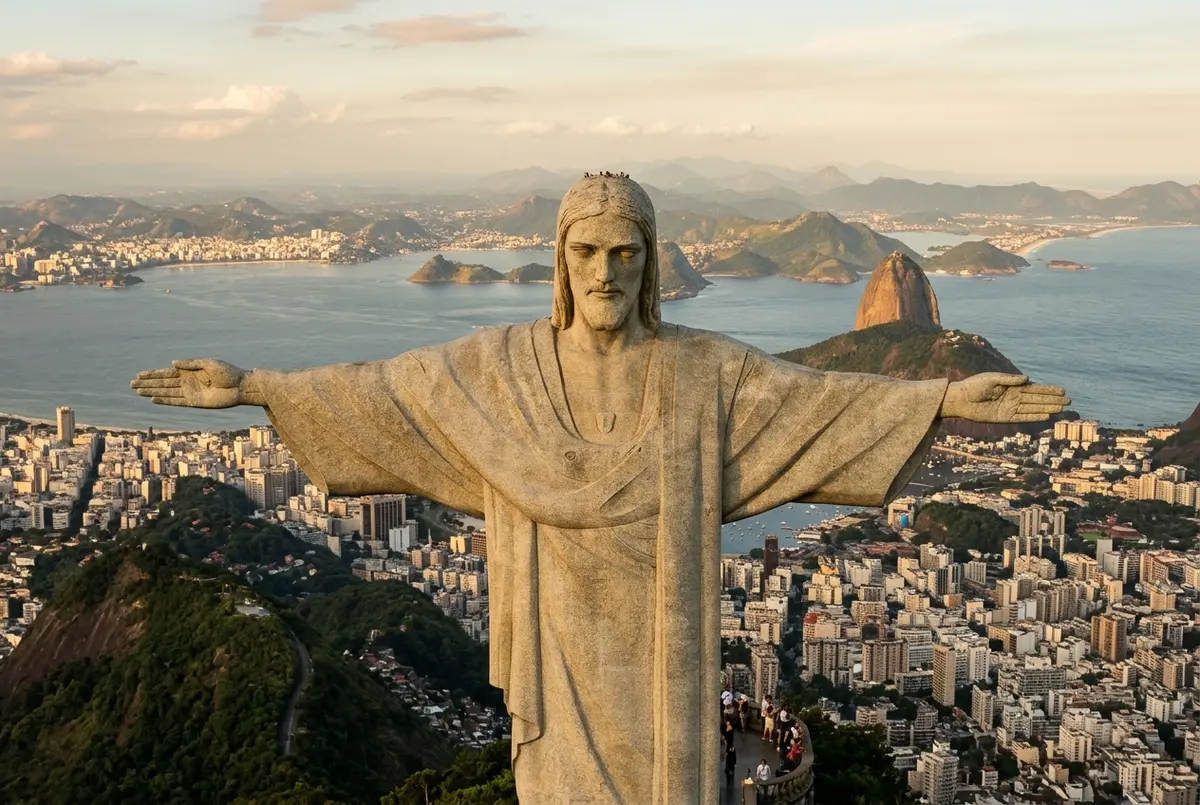
Reinforced concrete clad in soapstone, with the base concrete material shipped in from Limhamn, Sweden.
Has Christ the Redeemer ever been struck by lightning?
Yes, twice: in 2008, damaging the fingers, head and eyebrows, and again in 2014, dislodging a finger.
Why is there a chapel inside Christ the Redeemer?
A chapel was consecrated inside the pedestal in 2006 on the statue’s 75th anniversary, giving it a space for Catholic weddings and baptisms.