Why Does Christ the Redeemer Have Its Arms Open?
What the meaning of the Christ the Redeemer statue is: the rejected first design, the cross shape and why it symbolizes peace.
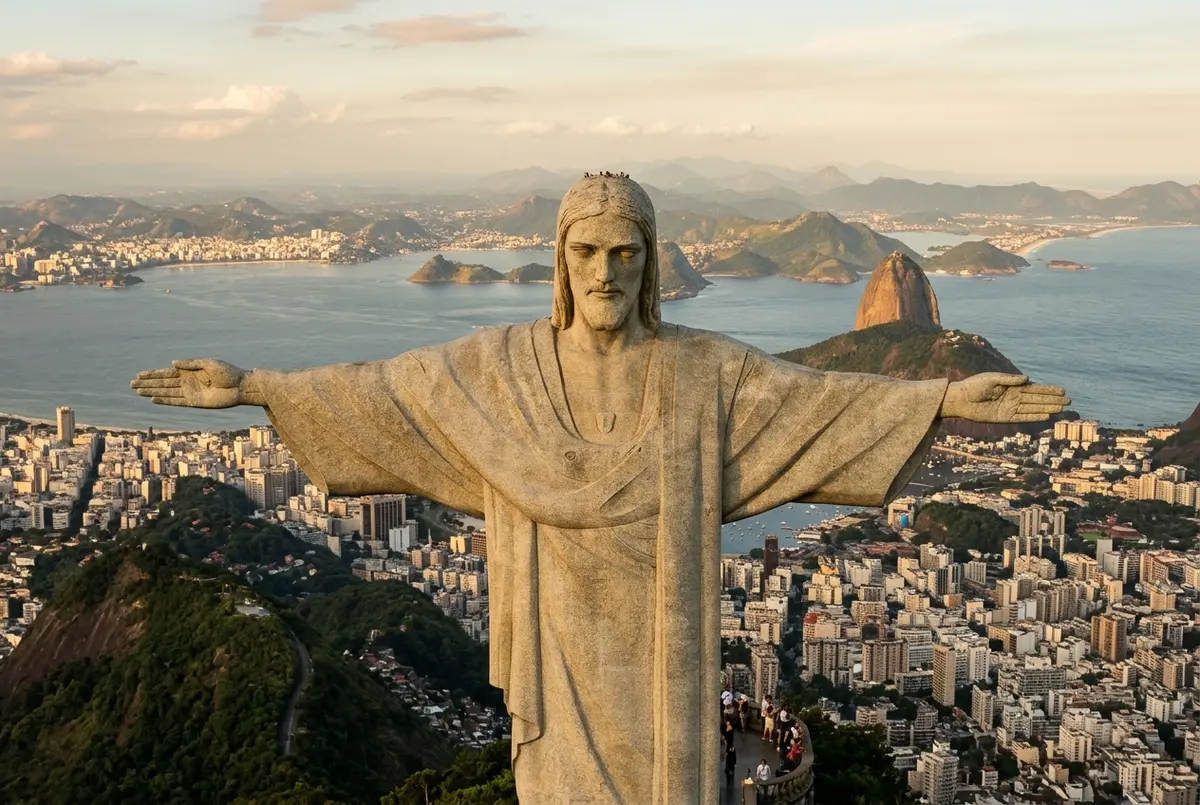
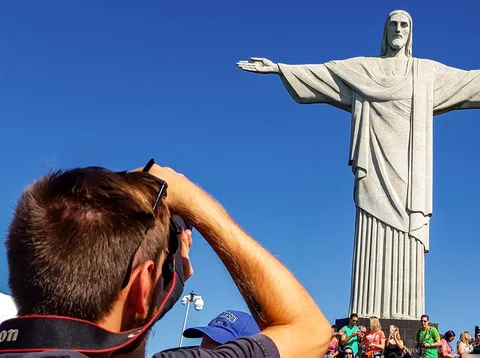
The open arms mean welcome and peace. Organizers first accepted a design of Christ holding a globe and a cross, then replaced it before construction with the open armed pose chosen specifically as a symbol of peace.
 Christ the Redeemer Entry Ticket by Corcovado Train From $48.99 · Classic train ride up See dates
On this page 7 sections
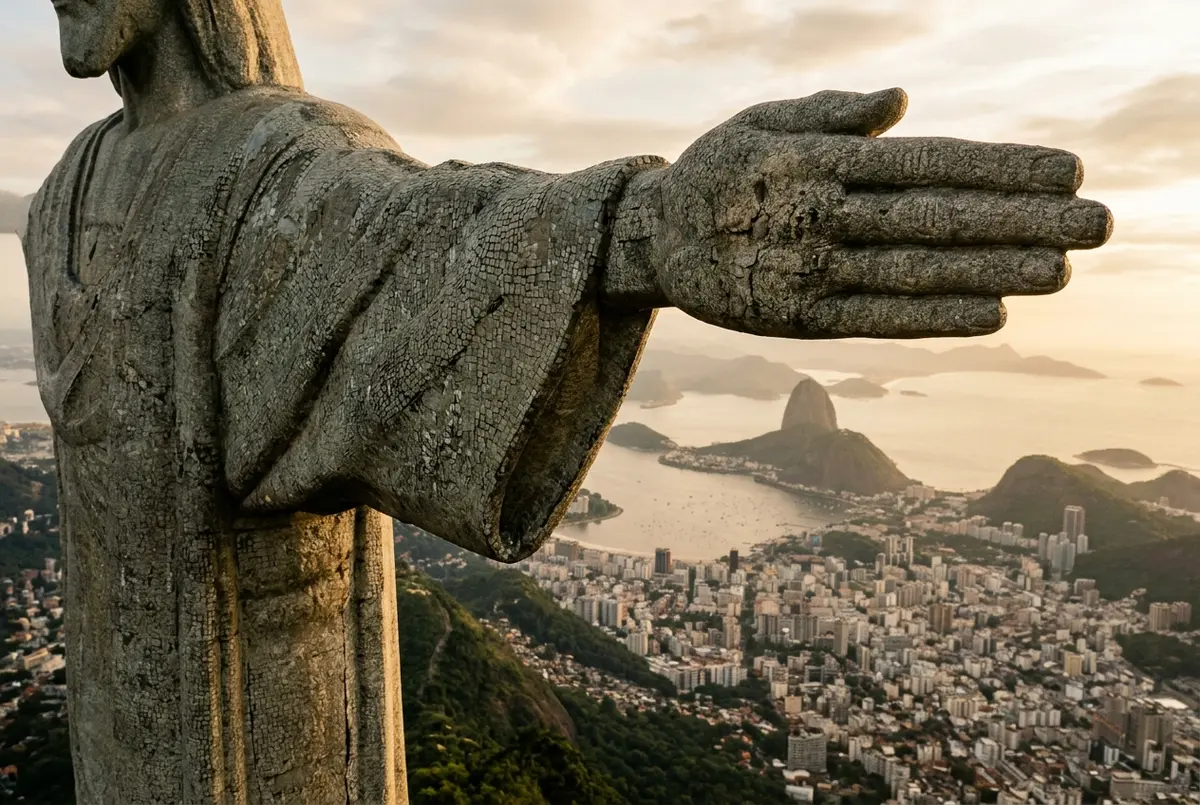
What is the meaning of the Christ the Redeemer statue? The open arms are read as welcome and peace: Rio’s own sanctuary describes the pose as an invitation, and the city’s tourism board calls the whole monument a symbol of welcome, peace and hope. I’d treat the arms as the single most deliberate design choice on the mountain, not a generic “welcoming Jesus” pose borrowed from elsewhere.
The statue in numbers
Source:WikipediaWhat is the meaning of the Christ the Redeemer statue?
The statue’s own sanctuary says the open armed image “convida cada pessoa a um encontro com Cristo e com o proximo,” meaning it invites each person to an encounter with Christ and with their neighbor, according to the Santuario Arquidiocesano Cristo Redentor. Rio’s tourism board, Riotur, frames the same monument as a symbol of welcome, peace and hope for the city it overlooks.
Both readings point the same way: the pose is meant to be read as a gesture toward the viewer, not a static religious icon standing apart from the city below it.
Why does Christ the Redeemer have his arms out?
The open arm pose was not the first design on the table. Wikipedia’s construction history notes that the initial plan was a large Christ holding a globe in one hand and a cross in the other, a far more conventional religious statue. Organizers eventually chose the open armed version instead, specifically as a symbol of peace.
Say the committee had kept that first design: the statue on Corcovado today would be a figure holding objects, closer to a church icon than the outward facing gesture millions now recognize in photos.
Does the open arm pose form a cross shape?
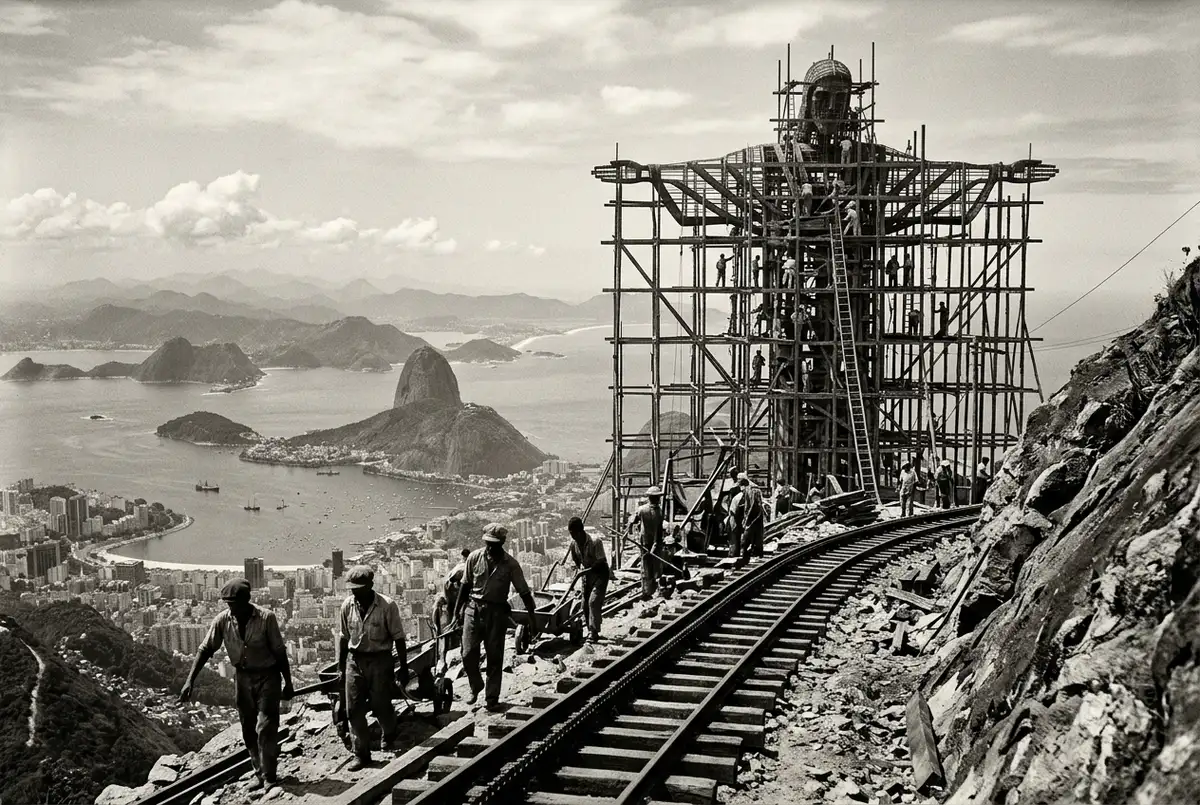
Yes, and it was an engineering decision as much as an artistic one. Engineers chose reinforced concrete over steel specifically because it suited a cross shaped statue better than a steel frame would have. Albert Caquot designed the reinforced concrete structure that made the shape possible.
Picture standing on the viewing platform right beneath the statue: you have to turn your head to take in both outstretched arms at once, since they span 28 metres, wider than most city intersections. That is a concrete way to feel why engineers called the shape a cross, not just a pose.
| Design | What it shows | Intended meaning | Built? |
|---|---|---|---|
| Rejected first design | Christ holding a globe in one hand, a cross in the other | A conventional religious figure | No |
| Final open arm design | Christ with arms stretched wide in a cross shape | Peace and welcome | Yes, 1931 |
Who designed the statue and chose the open arm pose?
Local engineer Heitor da Silva Costa and artist Carlos Oswald designed the statue, and French sculptor Paul Landowski built the final work, working with French engineer Albert Caquot on the structure and Romanian sculptor Gheorghe Leonida on the face.
Why is Jesus called the Redeemer?
The title comes from the Catholic Church’s own naming of the monument: the site is dedicated as a sanctuary under the name Cristo Redentor, run today as a monument of the Catholic Church that welcomes people of every background and belief. I’ll stay descriptive here rather than wade into theology: the name is the one the archdiocese chose when it dedicated the site.
“Bracos abertos convida cada pessoa a um encontro com Cristo”
Santuario Arquidiocesano Cristo Redentor, 2026 · source
What does the Cristo Redentor represent today?
The sanctuary that runs the site now describes it as welcoming visitors of different backgrounds and beliefs with respect for religious freedom, while keeping a Catholic identity. Riotur’s framing lines up with that: a symbol of welcome, peace and hope for the whole city, not only for one faith.
If you are planning a visit and want the full history of how the statue came to be built, or the raw facts and numbers behind it, those pages pick up where this one leaves off. For how tall the finished statue actually stands, see how tall Christ the Redeemer is.
Questions
What is the statue made of?
Reinforced concrete with a soapstone surface. The concrete gives the cross shaped structure its strength, and the soapstone covers the outside.
How tall is Christ the Redeemer including its pedestal?
38 metres total: the statue itself is 30 metres, and it stands on an 8 metre pedestal.
When was Christ the Redeemer inaugurated?
October 12, 1931, after nine years of construction that began in 1922.
Was the statue a gift from France?
No. Rio’s own tourism board states it was not a gift from France: donations came from Brazilian faithful, and the labor was Brazilian, even though the sculptor who built it was French.